
From Recipes to Reality: How Theoretical vs. Actual Food Cost Protects Restaurant Margins
by Ariane Ramil, VP, Development
In the restaurant business, food cost is often treated as a single percentage on the P&L. But that number alone doesn’t tell you why performance is strong — or where profits are leaking.
The real insight comes from analyzing Theoretical Food Cost versus Actual Food Cost.
This comparison reveals how well a restaurant executes recipes, controls inventory, and manages waste. More importantly, it turns food cost from a backward-looking number into a forward-looking performance metric.
Understanding Theoretical Food Cost

Theoretical Food Cost represents the ideal cost of food based on perfect execution. It answers the question:
“What should our food cost be if every item is prepared exactly according to recipe, with no waste, over-portioning, or loss?”
How Theoretical Food Cost Is Computed
Theoretical food cost is driven primarily by recipes and sales mix. The calculation involves:
1. Standardized Recipe
- Each menu item has a defined recipe.
- Recipes specify ingredients, quantities, and portion sizes.
- Ingredient costs are pulled from vendor pricing or inventory cost data.
2. Recipe Costing
- Each ingredient’s unit cost is multiplied by the quantity used.
- All ingredients are summed to determine the cost per menu item.
3. Sales Data
- POS sales data shows how many units of each menu item were sold during a given period.
4. Theoretical Usage
- Recipe quantities are multiplied by units sold to calculate how much of each ingredient should have been used.
5. Theoretical Food Cost
- Total theoretical ingredient usage × ingredient cost = theoretical food cost for the period.
In short, theoretical food cost is sales-driven and recipe-based, not influenced by what actually happened in the kitchen.
Understanding Actual Food Cost
Actual Food Cost reflects what the restaurant truly spent on food during a period. It is grounded in accounting records and inventory movement.
How Actual Food Cost Is Computed
Actual food cost is calculated using the standard inventory formula:
**Beginning Inventory
- Purchases – Ending Inventory = Actual Food Cost**
This calculation incorporates:
- Vendor invoices
- Inventory counts
- Transfers and adjustments
- Credits and returns
Actual food cost captures reality — including waste, spoilage, theft, over-portioning, prep errors, and process breakdowns.
The Power of Variance: Theoretical vs. Actual Food Cost
The most important insight comes from comparing the two.
Food Cost Variance Formula
Actual Food Cost – Theoretical Food Cost = Food Cost Variance
- Favorable variance: Actual cost is lower than theoretical (rare, but possible with strong controls).
- Unfavorable variance: Actual cost exceeds theoretical, signaling operational issues.
What the Variance Reveals
Tracking this variance helps operators identify:
- Over-portioning by kitchen staff
- Inconsistent recipe execution
- Waste from poor prep or forecasting
- Theft or unrecorded comps
- Inventory count inaccuracies
- Pricing issues or outdated recipes
Rather than guessing why food cost is high, operators can pinpoint where and why performance is breaking down.
Why Food Cost Variance Is a Key Performance Metric

1. Measures Operational Discipline
Two stores can have the same food cost percentage but very different levels of control. A low variance indicates strong execution and systems discipline, while a high variance signals process failure.
2. Enables Store-Level Comparisons
When managing multiple locations, theoretical vs. actual variance allows leadership to:
Compare stores on execution, not just sales volume
Identify high-performing managers
Replicate best practices across the organization
3. Protects Profit Margins
Even a 1–2% unfavorable variance can translate to tens or hundreds of thousands of dollars annually for multi-unit operators. Variance tracking turns small leaks into visible, actionable insights.
4. Improves Accountability
Because theoretical cost is tied to recipes and sales, managers cannot blame “high prices” alone. Variance analysis drives accountability at the store and team level.
How Restaurant365 (R365) Automates Theoretical vs. Actual Food Cost
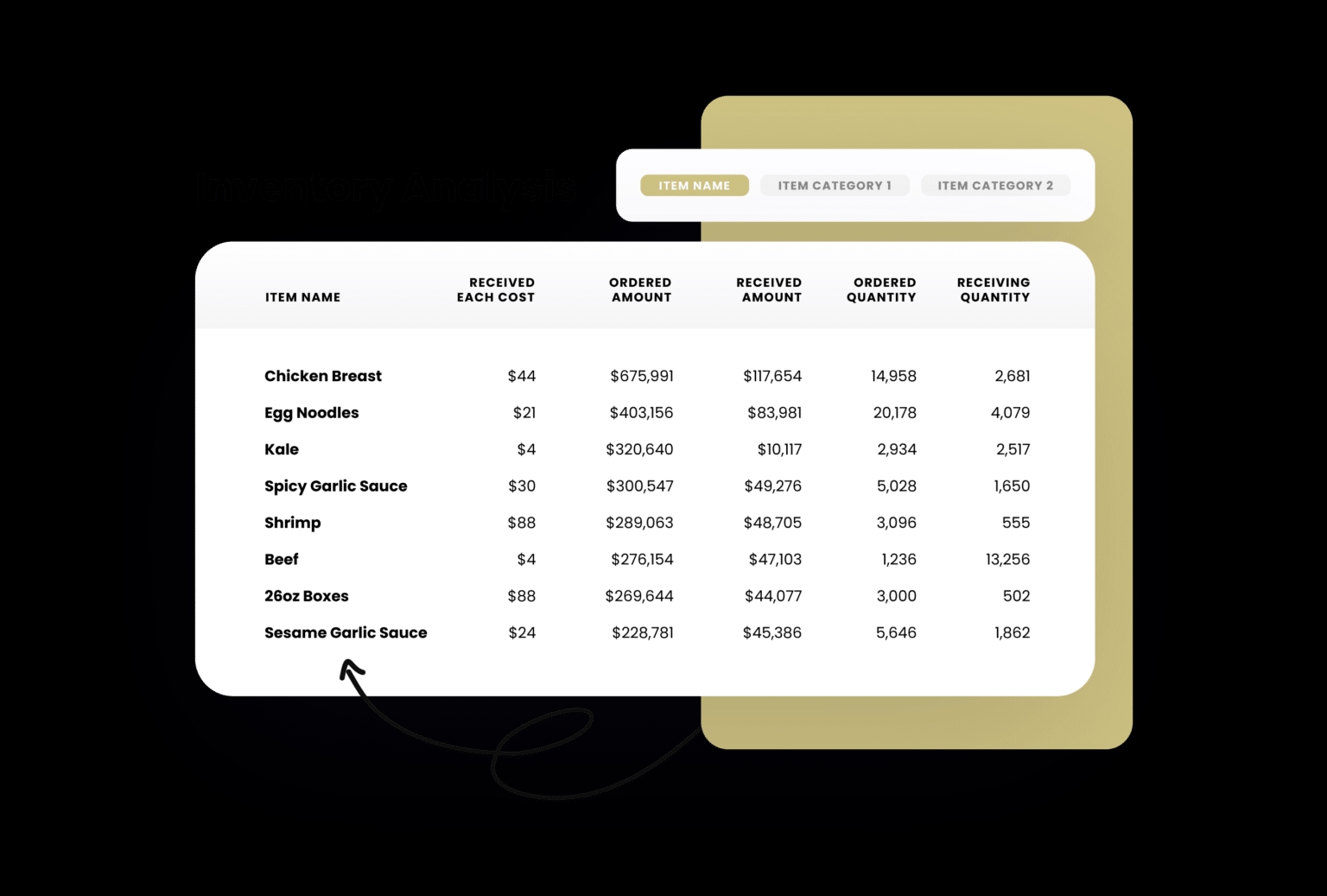
Manually calculating theoretical food cost is complex and time-consuming. This is where restaurant-specific accounting platforms like Restaurant365 (R365) provide significant value.
Key R365 Capabilities
1. Recipe & Menu Management
- Centralized recipe database
- Ingredient linking to vendor pricing
- Automatic recipe cost updates when prices change
2. POS Integration
- Daily sales data flows directly into R365
- Sales mix is automatically matched to recipes
3. Inventory & Purchasing Integration
- Vendor invoices are imported and coded
- Beginning and ending inventory counts are tracked
- Actual food cost is calculated automatically
4. Automated Variance Reporting
- R365 compares theoretical usage to actual usage
- Reports highlight variances by:
- Ingredient
- Menu item
- Category
- Location
This automation allows operators to review actionable insights daily or weekly, rather than waiting for month-end financials..
The Role of Outsourced Accounting Teams in the Philippines

While software like R365 provides the tools, data accuracy and discipline determine the quality of insights. This is where outsourcing accounting processes to the Philippines becomes a strategic advantage.
Experienced restaurant accounting teams can:
- Maintain accurate recipe costing and updates
- Review vendor pricing and invoice coding
- Reconcile inventory counts and variances
- Monitor theoretical vs. actual food cost trends
- Prepare variance dashboards for management
- Flag issues before they impact monthly results
By outsourcing these repeatable, detail-heavy processes, restaurant operators gain timely, reliable analytics without overloading in-house teams.
Turning Insight into Action

Theoretical vs. actual food cost analysis should not live in a report—it should drive behavior.
High-performing restaurants use variance data to:
Retrain staff on portioning and recipes
Adjust prep procedures
Improve inventory counting accuracy
Renegotiate vendor pricing
Re-engineer menus with poor margin control
When reviewed consistently, variance becomes an early warning system—allowing leadership to act before profit erosion becomes visible on the P&L.
Final Thoughts
In today’s restaurant environment, managing food cost is no longer about hindsight — it’s about precision and control. Theoretical vs. actual food cost analysis transforms food cost from a static percentage into a dynamic performance metric.
With restaurant-specific platforms like R365 and the support of skilled outsourced accounting teams, operators can gain daily visibility into execution, protect margins, and scale with confidence.
In a business where pennies matter, understanding the gap between what should happen and what did happen makes all the difference.
For more information, please fill out the form below. We’ll circle back with you shortly to discuss your requirements in further detail.
We’d love to Meet You In Person Or Via The Web!
If you have any questions, or just want to learn more about how our services can contribute to your operation’s success, please fill out the form and we’ll respond as soon as we can. Alternatively, call us directly at (818) 888-9579.