
Why Restaurant365 Frustrates CFOs Early On – and How to Fix It
by John Laporte, President, RRFMG Technology Services
As a certified Restaurant365 (R365) implementation, service, and channel partner with many years of hands-on experience, I’ve worked with restaurant companies ranging from small regional operators to complex, multi-brand enterprises. I’ve sat in countless meetings with CFOs, controllers, and accounting leaders – many of them CPAs, MBAs, and veterans of enterprise systems like NetSuite, Workday, or Microsoft Dynamics GP – who many times say some version of the same thing:
“We bought Restaurant365 because it was supposed to make our lives easier… but right now, it’s just frustrating.”
This article is written for those CFOs. Not to defend the software blindly, but to explain why that frustration is so common early on, what’s actually happening under the hood, and how companies can move forward successfully with R365 rather than abandoning it or limping along with low confidence in their numbers.
The Paradox of Restaurant365
Restaurant365 is, at its core, a very powerful platform. It tightly integrates accounting, inventory, purchasing, operations, and reporting in a way that most general ledger systems simply do not. When implemented and used correctly, it can deliver:
- Faster month-end closes
- Highly accurate food and beverage costing
- Real-time operational visibility
- Strong audit trails
- Scalable processes for multi-unit growth
And yet, many CFOs are unhappy – especially in the first 6 to 12 months.
This dissatisfaction is rarely about intelligence, experience, or capability. These are seasoned professionals who have successfully led accounting teams and implemented complex systems before. The problem lies elsewhere: in expectations, implementation approach, and a fundamental mismatch between how R365 works and how many accounting teams are trained to think.

Common CFO Pain Points with R365

While each CFO has their own list of frustrations, there are several recurring themes that surface again and again.
- “I Don’t Understand the System”
This is one of the most common and most painful admissions I hear. A CFO who has spent a career mastering accounting principles suddenly feels disoriented.
R365 does not behave like a traditional GL-first accounting system. Instead, it is operationally driven. Inventory, invoices, and daily restaurant activity are not peripheral – they are foundational. If those inputs are wrong, the financial outputs will be wrong too.
For CFOs used to correcting issues at the journal-entry level late in the month, this can feel backwards and uncomfortable.
2. Bank Deposits and Reconciliations Feel Overly Complex
In R365, bank deposits are often tied to POS data, sales journals, clearing accounts, and timing differences between cash, credit cards, and third-party delivery. When any part of that chain is misconfigured – or not fully understood – reconciliations can feel impossible.
What looks like a “bank reconciliation issue” is often actually a configuration, mapping, or process issue upstream.
3, Inventory Becomes a Source of Anxiety Instead of Insight
Inventory is where R365 either shines—or becomes a nightmare.
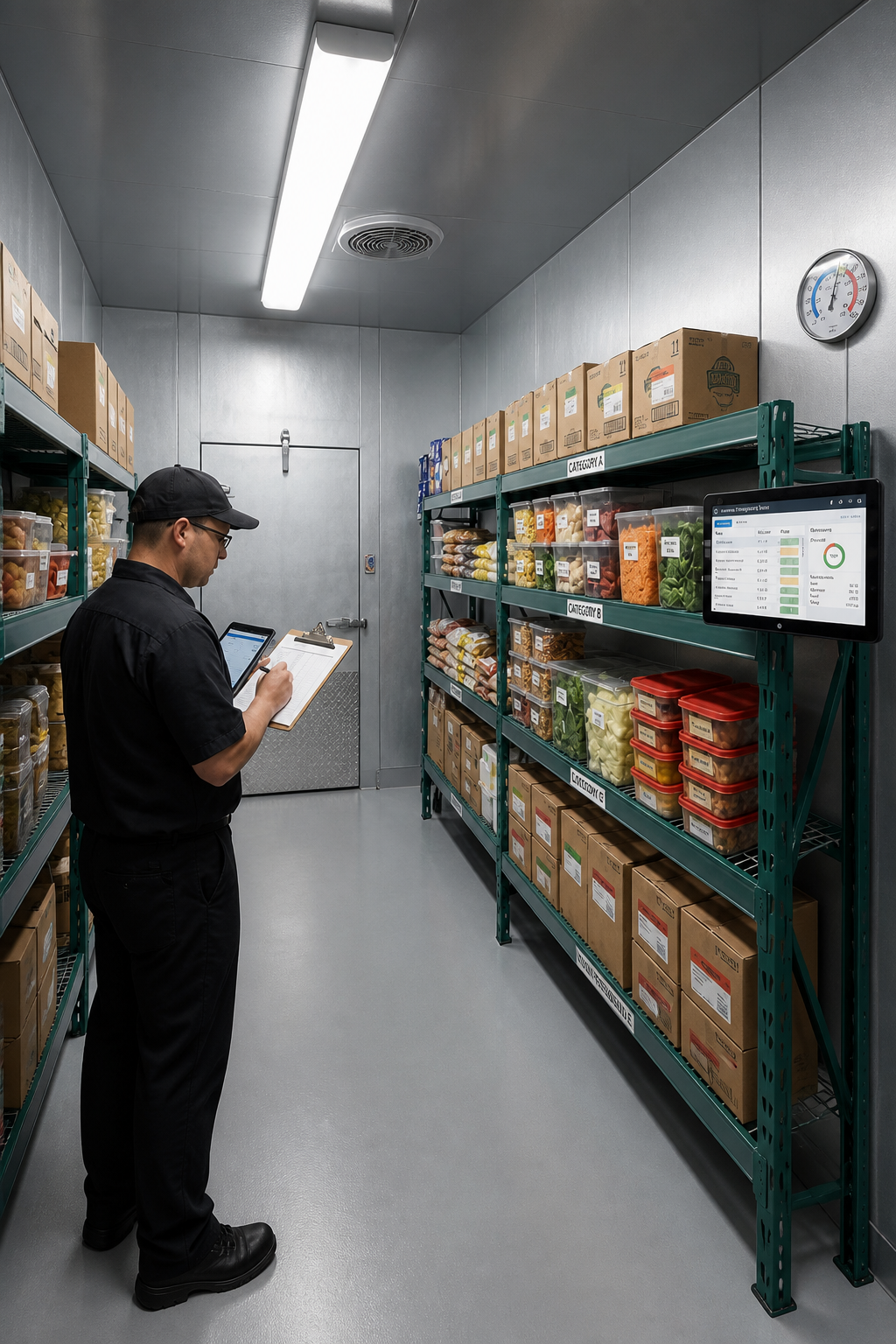
Unlike traditional AP processes where invoices are entered at a summary or expense level, R365’s inventory accounting is highly dependent on accurate item-level invoice entry. Every quantity, unit of measure, and cost matters.
If invoices are:
- Entered incorrectly
- Not tied to the correct items
- Missing UOM conversions
- Posted without proper review
…the ripple effects are significant:
- Incorrect inventory valuation
- Distorted COGS
- Inaccurate theoretical vs. actual usage
- Potential tax implications related to inventory on hand
For a CFO, this feels like the system is unreliable – when in reality, the system is being fed unreliable data.
The Root Cause: SMB Implementation DNA
One of the most important – and least discussed – reasons for CFO frustration is this:
Restaurant365’s implementation model is still heavily influenced by its SMB roots.
The standard onboarding approach often looks like this:
- Software is sold
- A series of weekly, one-hour onboarding calls are scheduled
- The expectation is that the client’s accounting team will “learn as they go”
For smaller operators with simple structures, this can work reasonably well. For mid-market and enterprise operators with:
- Multiple entities
- Complex inventory
- Sophisticated reporting requirements
- Tight close deadlines
…it is almost always insufficient.
- CFOs expect implementation to feel like:
- NetSuite
- Workday
Other enterprise-class rollouts

Instead, they experience something closer to guided self-implementation. The gap between expectation and reality is where frustration takes root.
R365 Is Not Just a New System – It’s a New Way of Working

One of the biggest mindset shifts CFOs must make is this:
Your accounting team cannot operate the same way in R365 as they did in other systems.
R365 introduces automation – but automation only works when:
- Daily tasks are done correctly
- Weekly reviews are consistent
- Monthly maintenance is understood and respected
Examples of “Different” Work in R365
- AP teams must think operationally, not just financially
- Inventory counts must be timely, accurate, and reviewed
- Unit-of-measure discipline becomes critical
- Clearing accounts require active management
- Period-end checklists are not optional
When these tasks are skipped or misunderstood, month-end closes slow down dramatically, frustration rises, and confidence in the numbers erodes.
The Confidence Problem
Perhaps the most damaging outcome of a poor early R365 experience is loss of confidence.
When a CFO:
- Can’t reconcile inventory
- Doesn’t trust COGS
- Sees unexplained variances month over month
…the natural response is to question the system.
But in most cases, the issue is not the software – it’s the combination of:
- Insufficient training
- Incomplete process design
- Lack of experienced oversight

Without confidence, CFOs revert to:
- Shadow spreadsheets
- Manual adjustments
- “Off-system” reconciliations
This defeats the entire purpose of adopting R365 in the first place:
- Faster month-end closes
- Highly accurate food and beverage costing
- Real-time operational visibility
- Strong audit trails
- Scalable processes for multi-unit growth
And yet, many CFOs are unhappy – especially in the first 6 to 12 months.
The Real Answer: Proper Training and Role Alignment

There is no shortcut here.
Proper training of the accounting team is the single most important factor in long-term R365 success.
This training must go beyond:
- “Which button do I click?”
And instead focus on:
- Why processes work the way they do
- What happens downstream if something is done incorrectly
- How daily actions impact monthly and annual results
Just as importantly, the CFO must understand these workflows well enough to:
- Ask the right questions
- Interpret results accurately
- Trust the team executing the processes
R365 rewards discipline. Without it, the system feels punitive.
The Way Forward: Leveraging R365 Channel and Service Partners
This is where the R365 channel and service partner ecosystem becomes invaluable.
Certified R365 partners work exclusively – or primarily – on this platform. They bring:
- Real-world restaurant accounting experience
- Pattern recognition from dozens or hundreds of implementations
- Deep knowledge of common failure points
- Practical, not theoretical, best practices
A strong partner relationship acts as:
- A backstop when internal expertise is thin
- A bridge when a key accounting team member leaves
- A coach for frustrated CFOs who need clarity
- A sounding board for process and system decisions

Rather than struggling in isolation, CFOs gain access to people who have already seen – and solved – the same problems.
Reframing the R365 Journey

For CFOs currently frustrated with Restaurant365, the most important realization is this:
Early pain does not predict long-term failure.
In fact, many of the most successful R365 clients I work with today started out deeply unhappy. The turning point came when they:
- Acknowledged the system required different thinking
- Invested in deeper training
- Brought in experienced R365 specialists
- Stopped trying to force R365 to behave like their old system
Once that shift occurred, the same system that caused frustration became a competitive advantage.
Final Thoughts for CFOs
Restaurant365 is not a plug-and-play accounting system. It is a restaurant operations and accounting platform that demands engagement, discipline, and expertise.
For CFOs willing to:
- Recalibrate expectations
- Invest in their people
- Lean on certified R365 partners
…the payoff can be significant: better visibility, stronger controls, faster closes, and a finance function that truly supports operations.
Frustration is common. Failure is not inevitable.
The way forward is not abandoning R365 – but learning how to use it the way it was designed to be used, with the right partners by your side.
For more information, please fill out the form below. We’ll circle back with you shortly to discuss your requirements in further detail.
We’d love to Meet You In Person Or Via The Web!
If you have any questions, or just want to learn more about how our services can contribute to your operation’s success, please fill out the form and we’ll respond as soon as we can. Alternatively, call us directly at (818) 888-9579.















Leave A Comment