
Restaurant365 Implementation Guide: How to Avoid Common Setup Mistakes
by John Laporte, President, RRFMG Technology Services
Restaurant365 is one of the most powerful, purpose-built platforms available for the restaurant industry. It delivers fully integrated accounting, inventory, workforce management, and reporting in a single system.
But here’s the reality most operators discover too late:
Success with R365 is not just about the software – it’s about how you implement it.
If you approach implementation the wrong way, even great software can feel like a failure. If you approach it correctly, it can transform how you run your business.
This 9-step guide explains how to do it right.
Step 1: Understand the Gap – Software vs. Implementation
Before you begin, recognize this critical truth:
R365 is a great system – but its standard implementation model is not designed for every organization.
The default corporate implementation approach is optimized for:
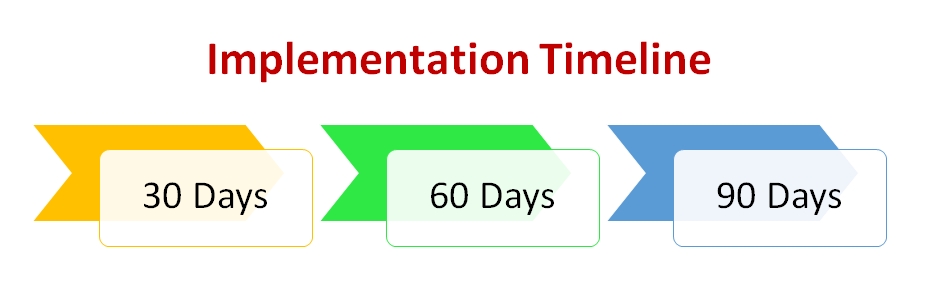
- Speed (typically a ~90-day timeline)
- Standardization across customers
- Limited weekly coaching time
This model works well under ideal conditions:
- Clean data
- Experienced accounting teams
- Available operational bandwidth
But most restaurant companies are not operating under ideal conditions.
They are:
- Managing active operations
- Dealing with staffing gaps
- Lacking internal system expertise
- Trying to implement while running the business
When those realities collide with a fixed 90-day clock, quality often suffers.
Step 2: Recognize the Risks of a Rushed Implementation

If implementation is driven by timeline instead of readiness, you may see:
Fragmented Setup
- Different coaches for accounting, inventory, and workforce
- No single owner of the full system design
- Decisions made in isolation
Poor Data Integrity
- Misaligned chart of accounts
- Incorrect vendor mappings
- Broken POS integrations
Field-Level Breakdown
- GMs struggling with inventory counts
- Scheduling disconnected from payroll
- Inconsistent data entry across locations
And most importantly:
If the field is broken, your financials will never be right.
Step 3: Follow the Rule – “A Good Student Needs a Good Teacher”
There’s a simple principle that applies here:
Successful implementation = Good system + Good partner
You are the “student.”
R365 is the “curriculum.”
But the implementation partner is the teacher.
Without the right teacher:
- Training becomes generic
- Problems get patched instead of fixed
- Your team never fully adopts the system.

Step 4: Choose the Right Implementation Partner

The most successful R365 implementations often involve certified third-party partners.
These partners exist for a reason:
There is a real gap between what is sold and what operators need to succeed.
What to Look For in a Partner Single Point of Ownership
You want:
- One consistent lead
- Someone who understands your entire operation
- Continuity across all modules
Not:
- A rotating group of coaches.
Full-System Thinking
A strong partner will:
- Align accounting, inventory, and workforce together
- Understand your POS and operational workflows
- Build your system holistically
Fix the Foundation (Not Just Symptoms)
Look for partners who:
- Rebuild incorrect setups
- Clean financial structures properly
- Design processes that scale
Field-Level Enablement
This is where most implementations fail.
Your partner must train:
- General Managers
- Kitchen managers
- Shift leaders
Not just your accounting team.
Because:
Your data quality starts in the field – not in the back office.
Step 5: Prioritize Training That Matches Your Operation
Avoid generic training libraries.
Instead, require:
- Role-based training (GM vs. accountant vs. operator)
- Location-specific workflows
- Hands-on system usage
Your team should learn:
- How THEY use the system daily
- Not how the system works in theory

Step 6: Leverage Specialized Support (Including Offshore Teams)

Some of the most effective partners use dedicated offshore teams.
When done right, this provides:
- Highly trained R365 specialists
- Faster response times
- Deeper familiarity with your account
The key difference:
- They are focused on your success, not juggling multiple clients under a time constraint
Step 7: Build for Long-Term Success – Not Just Go-Live
A successful implementation is not defined by “going live.”
It’s defined by what happens after:
Can you close periods quickly?
(Target: 5–7 days, not 30+)
Are your financials reliable?
(Trustworthy enough for decision-making)
Do your operators actually use the system?
(Not bypassing it)
Are inventory and labor aligned with accounting?
(One version of the truth).

Step 8: Avoid Becoming a Churn Statistic

When implementation fails:
- Operators blame the software
- They leave the platform
- They tell others it “didn’t work”
But in many cases:
The software didn’t fail – the implementation did.
Step 9: Take Control of Your Outcome
Before or during your implementation, ask:
- Who owns my success after 90 days?
- Is this timeline realistic for my organization?
- Do I have the internal resources to support this?
- Do I need a partner who can go deeper?
If those answers are unclear:
- You likely need a different implementation approach

Final Takeaway
Restaurant365 delivers on its promise – when implemented correctly.
To get the most value:
- Don’t rush the process
- Don’t rely solely on standard coaching
- Don’t ignore the field
Instead:
- Invest in the right partner
- Focus on foundational setup
- Train your entire organization
- Build for sustainability, not speed
Bottom Line
The software is only half the investment.
The implementation determines the outcome.
If you get both right, R365 becomes exactly what it was meant to be:
A single platform to run your entire restaurant business with confidence.