

DoorDash Says You Made $10,000. Your Bank Says $7,000. Where Did the Money Go?
by Ariane Ramil, VP, Development
The growth of third-party food delivery platforms such as DoorDash, Uber Eats, and Grubhub has transformed the restaurant industry. These platforms allow restaurants to expand their customer reach, increase sales opportunities, and serve customers beyond their physical locations.
However, while third-party delivery platforms create additional revenue streams, they also introduce accounting complexities that require proper monitoring, reconciliation, and financial reporting.
Unlike traditional dine-in or direct customer transactions, third-party delivery sales involve multiple parties, different settlement schedules, platform commissions, promotional discounts, refunds, and other adjustments. As a result, the amount deposited into a restaurant’s bank account rarely matches the total sales reported by the delivery platform.
Understanding the accounting principles behind these transactions and implementing a consistent reconciliation process are essential to maintaining accurate financial records and making informed business decisions.
1. Understanding the Basic Accounting Concepts for Third-Party Delivery Platforms

The first step in properly accounting for third-party delivery transactions is understanding that gross sales are different from net deposits.
When a customer places an order through DoorDash, Uber Eats, or Grubhub, the restaurant earns revenue from the food sold. However, the delivery platform typically deducts certain fees and adjustments before remitting the remaining balance to the restaurant.
For example, consider a restaurant that generates $10,000 in sales through a delivery platform during a particular week.
The platform may deduct the following:
| Description | Amount |
|---|---|
| Gross food sales | $10,000 |
| Platform commissions and fees | ($2,500) |
| Customer refunds and adjustments | ($200) |
| Promotional discounts charged to restaurant | ($300) |
| Net amount deposited | $7,000 |
The restaurant receives only $7,000 in its bank account, but its actual sales are $10,000.
From an accounting perspective, the restaurant should generally recognize the gross amount of revenue it earns, while separately recording the applicable commissions, fees, refunds, and promotional expenses or adjustments based on their nature and the contractual arrangements.
The basic accounting entries would look something like this:
| Account | Debit | Credit |
|---|---|---|
| Delivery Platform Receivable | $10,000 | |
| Food Sales Revenue | $10,000 | |
| Platform Commission Expense | $2,500 | |
| Refunds and Adjustments | $200 | |
| Promotional Expense | $300 | |
| Delivery Platform Receivable | $3,000 | |
| Bank | $7,000 | |
| Delivery Platform Receivable | $7,000 |
This example illustrates the importance of recording the complete transaction rather than simply recognizing the bank deposit as revenue.
The actual accounting treatment may vary depending on the contractual arrangements, whether the restaurant or platform is considered the principal in the transaction, and the nature of the discounts and adjustments. Accountants should evaluate these factors when establishing the appropriate accounting policy.
2. The Importance of Weekly Reconciliation
One of the most important accounting controls for restaurants using third-party delivery platforms is performing a weekly reconciliation.
A proper reconciliation should compare three primary sources of information:
- Third-Party Delivery Platform Reports: These provide detailed transaction information, including gross sales, commissions, refunds, promotional adjustments, taxes, and net payouts.
- General Ledger (GL) or Accounting Books: These show how delivery transactions, expenses, receivables, and adjustments were recorded in the accounting system.
- Bank Statements: These confirm the actual cash deposits received from the delivery platforms.
Each source serves a different purpose, and all three must agree after considering timing differences and reconciling items.

Why reconcile weekly instead of waiting until month-end?
Third-party platforms may have different payout schedules. Some transactions may be processed in one week but deposited in the following week. Refunds, chargebacks, and other adjustments may also appear in subsequent settlement reports.
Waiting until the end of the month to investigate these differences can make it difficult to identify the source of discrepancies, especially when there are hundreds or thousands of transactions.
A weekly reconciliation helps restaurants:
- Identify missing deposits. Determine whether expected payouts have actually reached the bank account.
- Detect unrecorded expenses. Ensure platform commissions, service fees, and other deductions are properly reflected in the books.
- Identify discrepancies. Investigate differences between reported sales, accounting records, and actual deposits.
- Monitor outstanding receivables. Track amounts owed by delivery platforms that have not yet been remitted.
- Prevent errors from accumulating. Resolve discrepancies while transaction details are still readily accessible.
A consistent weekly reconciliation process provides management with greater confidence that recorded delivery sales and related expenses are complete and accurate..
3. Applying the Correct Accounting Principles and Having Knowledgeable Accountants

Having access to delivery platform reports is not enough. Restaurants also need knowledgeable accountants who understand how these transactions should be recorded.
One common mistake is recording only the net bank deposit as sales. Although this approach may make the bank reconciliation appear straightforward, it understates gross revenue and fails to properly recognize platform commissions and other deductions.
Another common issue is incorrectly classifying platform charges. Commissions, advertising fees, promotional discounts, refunds, sales taxes, and delivery-related adjustments may require different accounting treatments.
For example, a platform’s advertising charge should not automatically be treated the same as its commission expense. Similarly, sales taxes collected or remitted through a delivery platform should be evaluated based on the applicable tax arrangements and jurisdictional requirements.
Incorrect accounting treatment can have several consequences:
- Understatement or overstatement of restaurant revenue.
- Misclassification of operating expenses.
- Inaccurate food cost and profit margin analysis.
- Incorrect sales tax reporting.
- Unreconciled delivery platform receivables.
- Misleading financial reports for management.
For restaurant owners and executives, these errors can affect important business decisions, including pricing strategies, profitability assessments, labor planning, and evaluating the performance of individual locations.
This is why restaurant accounting should not be limited to data entry. Accountants must understand the business transactions, identify unusual items, investigate discrepancies, and apply appropriate accounting principles consistently.
4. Proper Month-End Closing and Financial Reporting
Weekly reconciliations establish a strong foundation for an accurate month-end close.
At the end of each month, accountants should ensure that all delivery platform transactions relating to the reporting period have been properly recorded, regardless of when the corresponding cash deposits are received.
The month-end process should include:
Revenue completeness. Verify that all sales earned during the month are recorded in the correct accounting period, including transactions with payouts received in the following month.
Expense recognition. Ensure that platform commissions, advertising fees, promotional charges, and other expenses are recorded in the appropriate period.

Receivable reconciliation. Review outstanding balances for each delivery platform and identify deposits that remain unpaid or are in transit.
Sales tax review. Verify that sales taxes are properly accounted for based on the applicable state and local tax requirements and the responsibilities of the restaurant and delivery platform.
Variance analysis. Investigate unusual fluctuations in delivery sales, commission percentages, refunds, and promotional expenses compared with previous periods.
Most importantly, the financial statements should reflect the restaurant’s actual operating performance.
Management should be able to distinguish between gross delivery sales, platform-related expenses, and net cash collections. This allows restaurant owners to assess whether third-party delivery channels are genuinely contributing to profitability or simply increasing sales volume at the expense of higher operating costs.
5. Leveraging Restaurant-Specific Accounting Software and POS Integration
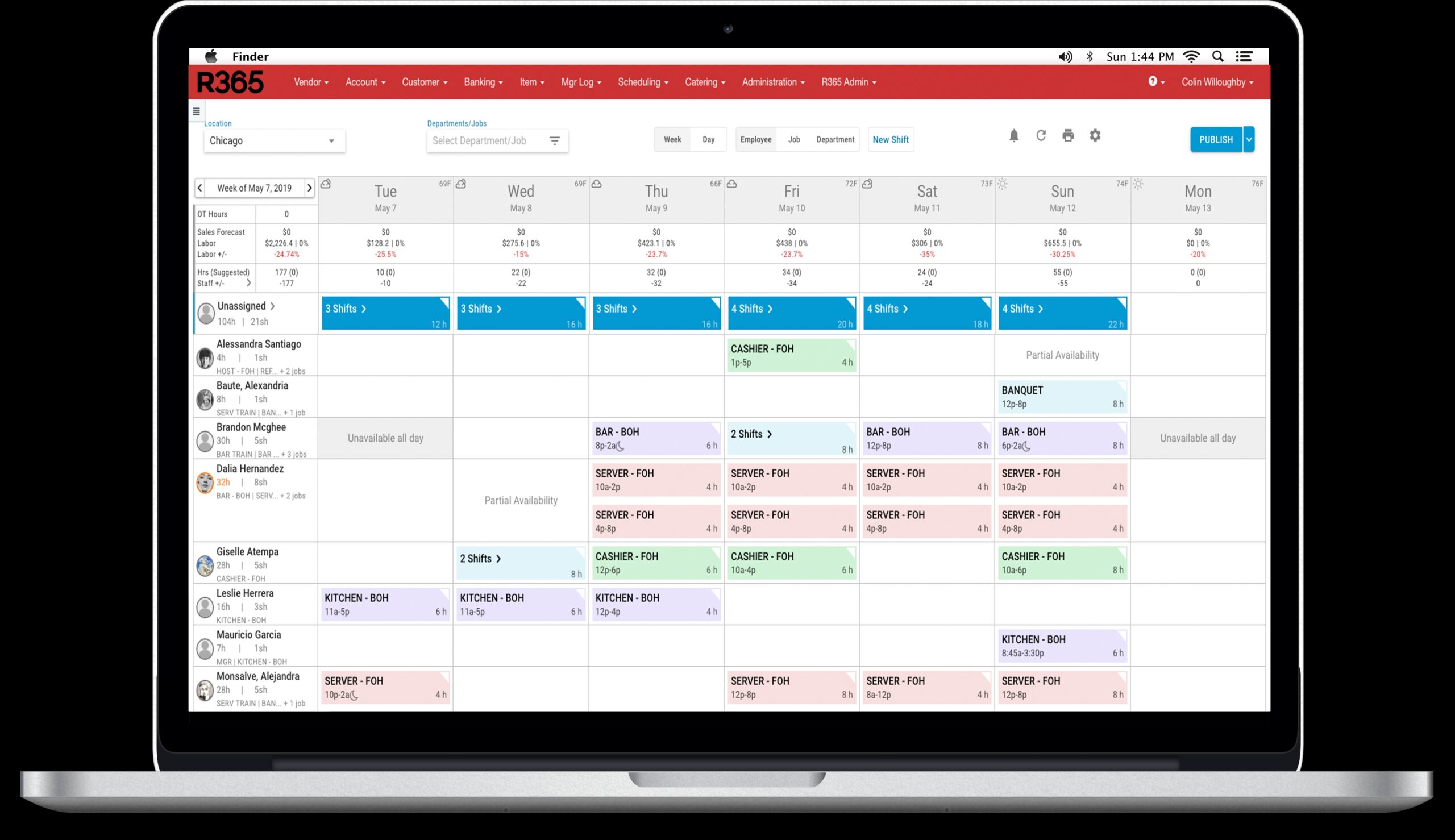
Technology plays an important role in maintaining accurate and timely accounting records.
Restaurants that operate multiple locations or process significant delivery volumes benefit from using restaurant-specific accounting software such as Restaurant365 (R365).
Restaurant365 provides restaurant-focused accounting and operational tools that help streamline financial processes, including general ledger management, accounts payable, bank reconciliation, and financial reporting.
When properly configured, delivery platform and POS integrations can help automate the flow of transaction data into the accounting system, reducing manual encoding and improving consistency.
Point-of-sale (POS) systems also play a critical role. They capture sales transactions, identify payment methods, distinguish dine-in, takeout, and third-party delivery sales, and provide the underlying sales information needed for reconciliation.
An effective accounting workflow generally follows this process:
- POS captures the sales. Orders are recorded and categorized according to their sales channel.
- Delivery platforms generate settlement reports. Gross sales, fees, refunds, and other adjustments are summarized.
- Accounting software records transactions. Integrated or imported data is mapped to the appropriate general ledger accounts.
- Accountants reconcile the transactions. Weekly comparisons are performed between platform reports, accounting records, and bank deposits.
- Month-end reporting is finalized. Outstanding items are resolved, accruals are recorded where necessary, and financial statements are prepared.
However, automation does not eliminate the need for accounting oversight. Integration errors, incorrect account mappings, duplicate transactions, and incomplete data feeds can still occur. Accountants must regularly validate the information flowing between systems and investigate exceptions.
6. Why Outsourcing Restaurant Accounting to the Philippines Can Help
For restaurant groups operating in the United States, outsourcing accounting functions to knowledgeable professionals in the Philippines can provide an effective way to strengthen financial operations while managing costs.
A qualified offshore accounting team can support weekly delivery platform reconciliations, POS sales reviews, general ledger maintenance, bank reconciliations, month-end closing, and financial reporting.
Beyond performing routine accounting tasks, an experienced team can establish standardized procedures, identify recurring discrepancies, monitor outstanding platform receivables, and provide management with timely financial information.
The key is to work with an outsourcing partner that understands U.S. restaurant accounting, third-party delivery platforms, sales tax considerations, POS integrations, and restaurant-specific accounting systems such as R365.

With clearly defined processes, proper supervision, and consistent communication with the restaurant’s management team, offshore accountants can become an extension of the restaurant’s finance department rather than simply an additional data-entry resource.
Conclusion
Third-party delivery platforms provide restaurants with valuable opportunities to expand their customer base and increase sales. However, managing these channels requires more than simply recording the deposits received in the bank.
Restaurants must understand the difference between gross sales and net payouts, apply the correct accounting principles, and maintain a disciplined weekly reconciliation process comparing delivery platform reports, accounting records, and bank deposits.
Combined with proper month-end closing procedures, knowledgeable accountants, and restaurant-specific technology such as R365 and POS integrations, these practices help ensure accurate financial records and reliable management reporting.
Ultimately, the goal is not just to record how much money a restaurant receives from DoorDash, Uber Eats, or Grubhub. It is to understand how much revenue the restaurant generates, how much it costs to generate that revenue, and how much profit those delivery channels actually contribute to the business.
For more information, please fill out the form below. We’ll circle back with you shortly to discuss your requirements in further detail.

We’d love to Meet You In Person Or Via The Web!
If you have any questions, or just want to learn more about how our services can contribute to your operation’s success, please fill out the form and we’ll respond as soon as we can. Alternatively, call us directly at (818) 888-9579.













Leave A Comment